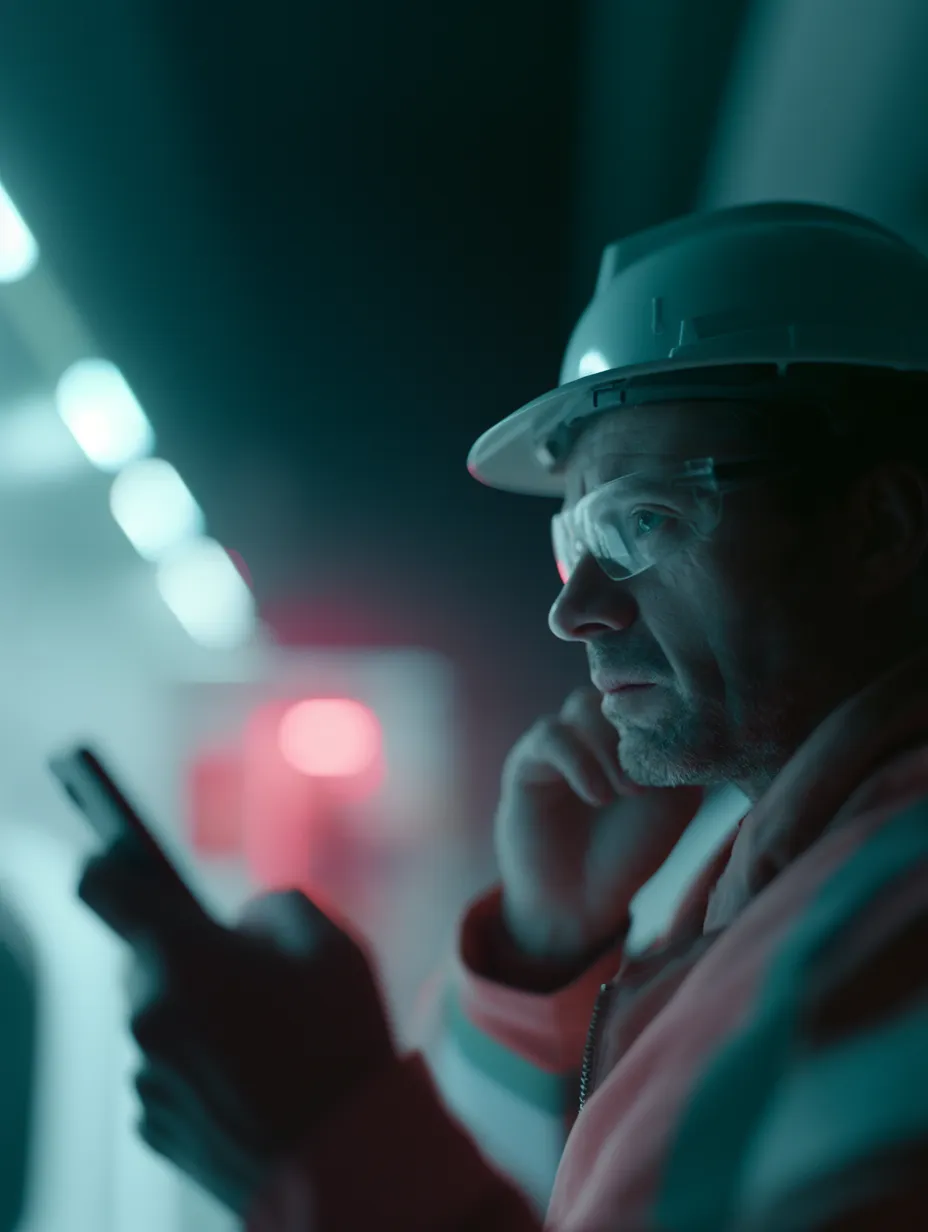
2014–2015
$152,875 raised from 911 backers by July 2015
A connected-device concept had to become a product people could understand, fund, and eventually manufacture.
- Role
- Design strategy, UX, and manufacturing input on the device
- Industrial design
- Form factor by White Box Design
- Scope
- iOS and Android apps, MYLE Cloud, desktop, integrations
- Tools
- SolidWorks, Illustrator, Photoshop, Adobe XD
Hardware and software change at different speeds, so the product vision has to respect the point where hardware becomes fixed.
What changed
- Indiegogo campaign
- $152,875 raised from 911 backers, MYLE's own count as of July 2015, before the campaign closedfrom a $50,000 goal, funded to 200% within weeks
- Battery life after firmware work
- two days under heavy use, no self-rebootingfrom device rebooting itself mid-capture
Executive summary. MYLE was an early-stage connected device that needed to move from concept to something market-ready. I worked across product, UX, positioning, and the crowdfunding campaign, helping define both the product and how we explained its value. The system included the wearable, iOS and Android apps, MYLE Cloud, desktop software, and integrations. By July 2015 the Indiegogo campaign had raised $152,875 from 911 backers against a $50,000 goal.
Capturing a thought without interrupting the moment
A thought arrives while you are driving, or in a meeting, or halfway up a ladder with a clipboard in your other hand. Capturing it means stopping what you are doing. Most people do not stop, and the thought goes.
By late 2014 the founders had a prototype that recognized voice commands better than anything on the market and, unusually, was device-agnostic. Two taps started a recording, two more ended it. No wake word, no listening in between. In 2014, when the alternative was a device that had to hear everything to catch anything, that was the interesting part.
Making it a product meant designing everything around it.
A wearable turned voice into action
TAP was the size of a coat button and clipped to clothing. It recorded audio notes of up to thirty seconds, held 2,000 of them onboard, and buffered everything until a phone came into Bluetooth range. That buffer is the detail that made it usable, because the people it was for are not reliably connected.
From there, a four-stage loop that stayed invisible when it worked. Capture on the device. Processing in the cloud, voice to text. Recognition turning that text into a candidate action, across roughly fifteen kinds of task. Execution into whatever tool the user already lived in, then a view of what had been done and what their thinking was adding up to over time.
I designed the mobile apps for iOS and Android, MYLE Cloud, and the desktop version. The device form factor came from White Box Design; my contribution to the hardware was adjusting that form so it could be prototyped and manufactured.
The industrial design and experience design overlapped without being the same job.
Mylets. The integrations were the proposition. A note only saves time if it lands where you were going to put it anyway: Evernote, OneNote, Outlook, Salesforce, Slack, Twitter, Wunderlist, Box, Facebook, Calendar. Individuals chose their own. Organizations got a preinstalled set plus optional extras.
MYLE Cloud. Individuals and organizations needed somewhere to manage which Mylets were live, review history, and control which groups a device synced with. Enterprise plans let teams build shared workflows across multiple devices, with employee management on top.
White labelling. Letting an organization brand the app opened contexts a consumer wearable does not reach alone, from corporate deployments to gyms.
Six scenarios revealed the product’s real value
TAP needed a user base large enough to attract third-party developers, so early scoping worked through six scenarios rather than one.
An inspector reviewing blueprints who needs a note without losing the thread. A meeting where nobody takes minutes. Home automation that activates when asked rather than listening constantly. A nurse at the end of a long shift entering medication data, where a large share of care errors originate. A trainer logging a workout as it happens. Someone tracking their own thinking through stress, grief, or recovery.
The healthcare and mindfulness cases changed how I thought about the device. A thought catcher for busy professionals is a convenience. The same device pointed at medication logging or grief is something else.
Hardware and software moved on incompatible clocks
Software scope kept moving after the hardware stopped being able to.
We specified six use cases, ten integrations, two mobile apps, a desktop app, a web platform, white labelling, and enterprise plans, all around a device that had to be tooled and manufactured. Every one of those was defensible on its own, and most of them were things a potential partner or backer had asked about.
The core planning problem was two products moving on incompatible clocks.
The problem is that the two halves run on different clocks. Software scope can expand after launch, and expanding it is normal. Hardware scope freezes the moment you commit to production. Once the tooling exists, the button count, the memory, the battery, the radio, and the enclosure are settled. Everything the software promises afterwards has to be deliverable on the device that already exists.
We kept designing as though both halves were flexible. So the platform grew ambitious in directions the hardware could not follow, and effort went into an enterprise and white-label story for a device still in pilot production at twenty units.
What I would do now is sequence the software against the hardware freeze rather than against the roadmap. Ask what the device is capable of on the day the tooling is ordered, treat that as the ceiling, and hold everything beyond it as a second-generation conversation instead of a first-generation commitment. The constraint is not a limitation to design around. It is the actual shape of the product.
A small device earned global attention
The Indiegogo campaign set a $50,000 goal and had raised $152,875 from 911 backers by July 2015.
The coverage mattered as much as the money. VentureBeat, Digital Trends, and the Irish Times all picked it up during the campaign.
Firmware work took battery life to two days under heavy use and stopped the device rebooting itself mid-thought. The company ordered a pilot production run of twenty units for field trials against a Q4 2015 ship date. TAP was later discontinued.
Similar projects
2013–2015
If an eighteen-year-old summer hire can survey a network, the tool works
MyMobileCoverage · Design lead, UX and industrial design
Carriers publish coverage maps. Customers live somewhere else. Survey backpacks, in-store kiosks, vehicle-mounted boxes, and a smartwatch-based voice quality tester mailed to people's homes.
Read case study
2016–2018
Designed in 2016, still running a decade later
Sens-Net Canada · Physical and digital product design
I designed across mobile, web, and connected hardware to give field workers and response teams better situational awareness and a clearer path from alert to response.
Read case study